
Displaying items by tag: ut vet school
Bear center admits Hemlock in bittersweet reopening of Townsend rehab
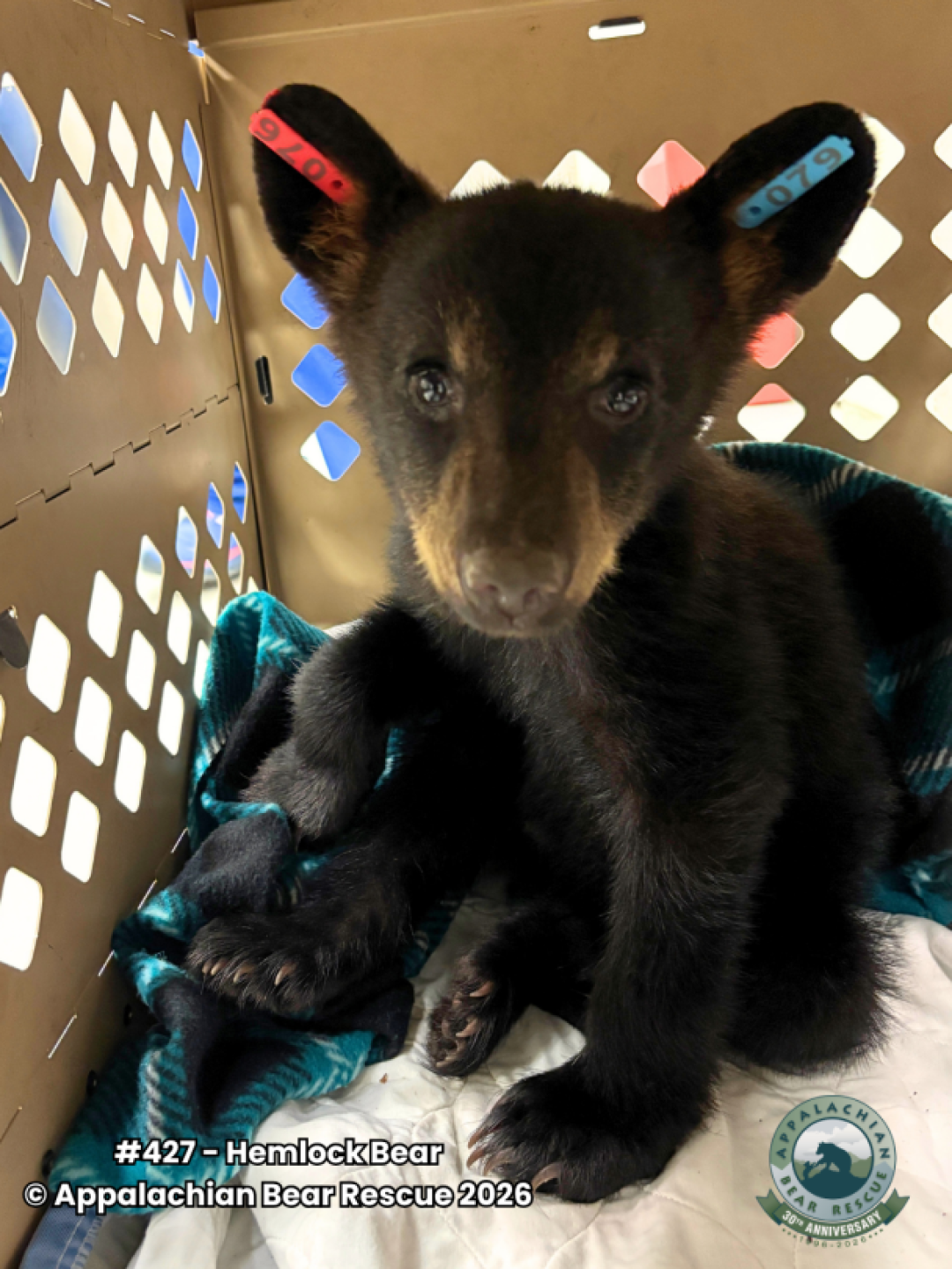 Hemlock is the first bear admitted to Townsend-based Appalachian Bear Rescue in 18 months. The bear was orphaned and found wandering around a residence near the Smokies. The animal was first treated at University of Tennessee College of Veterinary Medicine. Jon Bumpus/Appalachian Bear Rescue
Appalachian Bear Rescue welcomes first rescued bear cub in 18 months
Jon Bumpus is the communications coordinator for Appalachian Bear Rescue.
TOWNSEND — Appalachian Bear Rescue (ABR) has admitted its first rescued black bear cub in a year and a half, marking a significant milestone in the organization's return to rehabilitating orphaned and injured black bears in Tennessee.
The male cub, now known as Hemlock (ABR Bear #0427), arrived at Appalachian Bear Rescue on July 28, after being rescued by Tennessee Wildlife Resources Agency (TWRA) Wildlife Officer David Sexton. Full medical examination and minor procedures followed at University of Tennessee College of Veterinary Medicine (UTCVM).
The cub had reportedly been seen alone behind a Gatlinburg residence for approximately two weeks before rescue. The circumstances of the mother bear’s absence remain unknown.
When rescued, Hemlock weighed 3.5 kilograms (7.5 pounds)—less than half the average weight of a healthy black bear cub in late July, which is approximately 9 kilograms (20 pounds).
The name Hemlock was chosen after the native eastern hemlock tree—a species that symbolizes resilience and strength despite facing tremendous challenges throughout the Southern Appalachian Mountains.
UT vet school declines to treat wild birds, including raptors, songbirds and waterfowl, in deference to bird flu threat

Veterinary college takes precautionary measures due to bird flu resurgence
Sandra Harbison is a media relations specialist with the University of Tennessee College of Veterinary Medicine.
KNOXVILLE — High Pathogenic Avian Influenza (HPAI), a very contagious and often deadly disease of poultry, can result in the deaths of entire flocks within a matter of days. Also known as bird flu, HPAI has recently been detected in wildlife and poultry in Tennessee. This virus can spread quickly between birds, including birds that do not have any signs of disease. It has been reported to impact certain mammalian species, including humans, according to the Centers for Disease Control and Prevention. There is no treatment for HPAI, and the best prevention is to avoid sources of exposure.
Out of an abundance of caution, the University of Tennessee College of Veterinary Medicine (UTCVM) has made the difficult decision to temporarily halt the acceptance and treatment of injured or abandoned wild birds including raptors, songbirds or waterfowl (including owned waterfowl). This precautionary measure will help protect patients, faculty, staff and students from potential exposure to HPAI.
(The Tennessee Wildlife Resources Agency on Dec. 18 warned hunters, birdwatchers and poultry owners of increased bird flu risk. The CDCP as of Jan. 24 considers bird flu “widespread” in wild bird populations and reports limited outbreaks in poultry and livestock workers.)