
News (865)
Children categories
ES! Initiatives (74)
EarthSolidarity!™ Initiatives are endeavors to which anyone can contribute in deed as well as in spirit, that
- minimize waste and environmental impacts
- increase community resilience
- respect and protect ecosystem processes and all forms of life
- contribute to good living conditions for everyone around the globe
- affirm and celebrate our interdependence and interrelatedness in the Web of Life!

 National Park Service
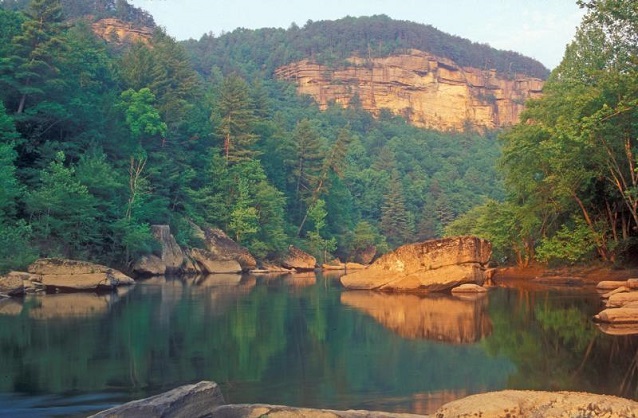
Land conservancy and estate of long-ago German immigrant expands protection of North White Oak Creek
Big South Fork National River and Recreation Area has grown inward by 60 acres.
The National Park Service announced this week that it officially acquired the donated acreage along North White Oak Creek within Big South Fork. It had previously been in private ownership.
The Allardt Land Company and the estate of Bruno Gernt (a remarkable individual in his own right) originally donated the approximately 60 acres within the boundaries of Big South Fork to TennGreen Land Conservancy. In December 2021, TennGreen transferred the property to the National Park Service.
“This tract provides essential protection for the south side of North White Oak Creek, a popular area in the southwest portion of the (125,000-acre park that straddles the Tennessee and Kentucky state lines in the Cumberlands).
“Park visitors will now forever be able to enjoy peaceful views across the creek of an oak-hickory and northern hardwood forest canopy,” Superintendent Niki Stephanie Nicholas said in a press release.
“We truly appreciate the Allardt Land Company, Estate of Bruno Gernt, and TennGreen for their generosity.”

From plastic pollution to extreme weather and the extinction crisis, the year ahead promises tough fights, enormous challenges and critical opportunities
This story was originally published by The Revelator.
A new year brings with it new opportunities — and more of the same environmental threats from the previous 12 months.
Amorous salamanders heat up the Southern winter
Written by Thomas Fraser Rob Hunter/Hellbender Press
Knox News: Winter a key time in salamander reproductive calendar
The woods, fields, rivers, creeks and wetlands of Southern Appalachia aren’t as barren as one would think in the midst of winter.
News Sentinel science reporter Vincent Gabrielle gives a solid rundown of why some of our amphibious denizens, including hellbenders, put themselves out there when so many other Appalachian critters retreat to burrows, dens and nests when the snow begins to blow.
“There are more salamander species that call the Southern Appalachians home than any other place on Earth. There are 30 salamander species present in Great Smoky Mountains National Park. Out of the 550 known salamander species on the planet, 77 live here in our backyards. Their bright colors make them the living jewels of Appalachia,” Gabrielle reports.
 Maddie Spradley
UT students, professors and staff scrub up for ‘creek kidney transplant’ in Knoxville
Imagine you’re a kid again. It’s a Saturday afternoon in July and after a morning full of rain the clouds begin to clear and the sun peeks out.
You run outside in your rubber rain boots to meet your friends down by the creek in your neighborhood, carrying a large bucket, boots squeaking as you go.
Once there, you and your friends carefully wade down into the water, curious to see what creatures lurk beneath the surface.
Great Smoky Mountains National Park closed the Walker Sisters Cabin because of safety concerns including a shifting chimney.
The cabin is now inaccessible, but visitors can still explore the homestead and outbuildings as work proceeds to analyze and fix the landmark Smokies dwelling.
Restoration work will be funded by Friends of the Smokies.
Per the National Park Service:
“The cabin dates back to the 1800s and was occupied by the Walker Sisters until 1964. Park crews are concerned about recent movement around the chimney in the two-story cabin. Noticeable cracks and buckling around the stone masonry need to be repaired and stabilized to prevent further movement. The cabin is now closed to all use.
“Cabin renovations, including roof replacement, are planned for the 2022 field season. The Friends of the Smokies have provided funding for this critical work as part of the Forever Places campaign to protect and preserve the park’s historical resources. The historic farmstead, including additional outbuildings, will remain accessible during the cabin closure. Visitors may reach the area by hiking approximately 1.4 miles along the Little Brier Gap Trail located near the Metcalf Bottoms Picnic Area.”
For more information about the Walker Sisters, please visit https://www.nps.gov/grsm/learn/historyculture/walker-sisters.htm.
Foothills Land Conservancy saved some green in 2021
Written by Foothills Land Conservancy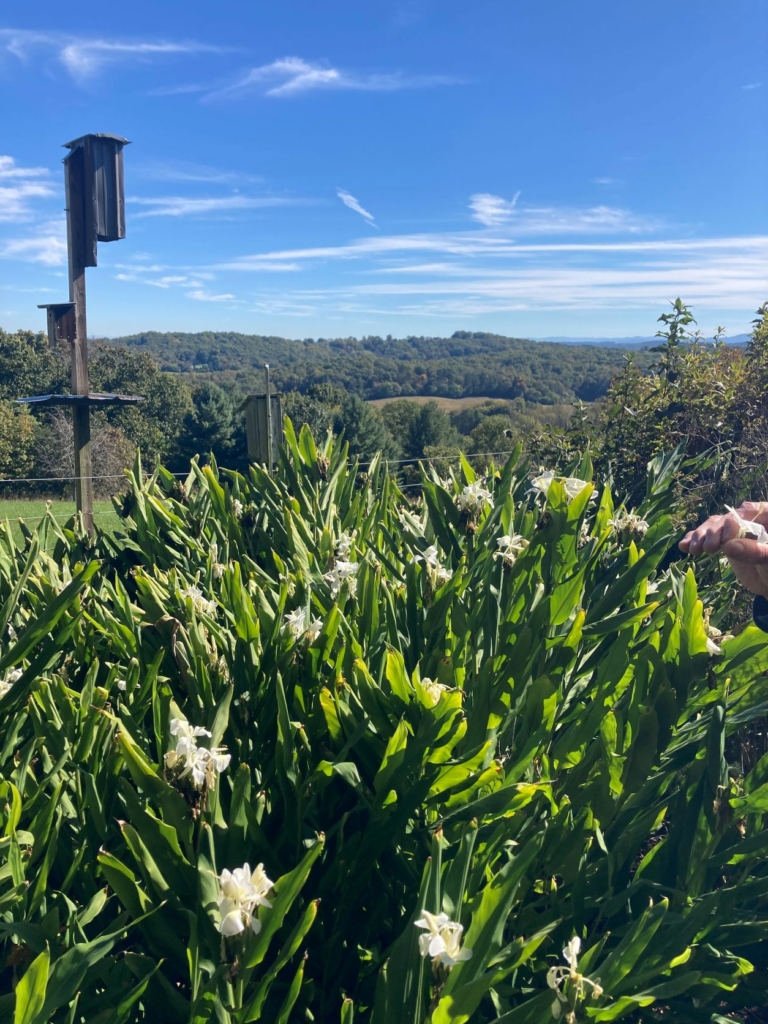
Maryville-based FLC is finalizing this year’s remaining land preservation projects
131 acres in Jefferson County, TN, now preserved!

Left: Outstanding views atop this recently preserved property with cosmos blooms in foreground.
Middle: Spring-fed pond on the property.
Right: Mature forest on the west side of the property. Touch here for additional images
To date in 2021, FLC has worked with landowners to assist in the conservation of over 1,300 acres. It anticipates a few thousand more acres protected by year's end.
Highlights from the past year
Glenn and Katie Savage are two of FLC’s newest friends and partners in land conservation.
They recently placed a conservation easement on their 131-acre property, affectionately named Dancing Winds Wildlife Sanctuary and Arboretum, which is “dedicated to the preservation and protection of God’s glorious creations — plants and animals.”
Glenn has cultivated over 400 different types of trees which are planted across the property and lovingly tends his home garden full of a variety of beautiful and unique flowers.
The Savages have several fields planted in corn/grain sorghum as well as a variety of oaks and other mast-producing trees to supplement the diet of the countless white-tailed deer and turkeys that call their property home.
Glen and Katie are also avid birdwatchers and provide many types of feeders for their winged backyard visitors. The Savages say that protecting their beloved property and knowing that it will forever remain a safe haven for wildlife has given them peace of mind, and Glenn hopes in the future to convince some of his neighbors to partner with FLC to protect their land, too.
Tap here for additional images
This is a submission from the Southern Alliance for Clean Energy.
After public advocacy from Knoxville community members, the KUB board passed a resolution that will deliver $5 million for emergency bill assistance to benefit those most in need, and an additional $1 million for weatherization to improve the comfort of people’s homes while lowering their bills by increasing energy efficiency. These funds are part of a pandemic relief credit from TVA.
KUB staff proposed a resolution in October that would have allocated $1.3 million of the total $7.3 million TVA pandemic recovery credit toward payment of debt owed by KUB customers, and the remaining $6 million would be distributed as a monthly bill credit for all residential and small business KUB customers. This would have resulted in an average savings of $17 over 12 months, or about $1.40 per month for all KUB customers, regardless of their level of need for pandemic relief.
Knoxville Water and Energy for All (KWEA), a coalition which SACE is a part of, circulated a petition asking that KUB instead forgive all debt owed by KUB customers, and then use the remaining funds to assist households who were struggling to pay their KUB bills. KWEA delivered nearly 200 petition signatures, and the KUB board asked that the resolution be amended.
As a result of our coalition’s advocacy, the KUB board allocated not only the originally proposed $1.3 million for debt relief, but also the remaining $6 million for customers in need.
While KUB did not pledge to forgive all debt, this is certainly a major win for the community.
The KUB Board’s decision to reallocate funds demonstrates the power of our community speaking up to advocate for ourselves and our neighbors.
(Remember this?) Report: Sen. Joe Manchin, a holdout Democrat on climate-change legislation, is a “coal baron”
Written by Thomas Fraser
The Guardian: Manchin monkey-wrenches climate change legislation because he’s made millions off fossil fuels
West Virginia Sen. Joe Manchin, the Democratic linchpin for game-changing climate legislation proposed in a budget bill as part of the Biden administration’s plan to provide aid to families as well as give a boost to efforts to reduce global warming, has thrown a now-infamous wrench in the works.
He has vigorously opposed key parts of the climate legislation included in the 2022 budget bill. Per the Guardian, it’s simply because he and his family have made a fortune off coal extraction in the relatively impoverished state of West Virginia and elsewhere.
“Financial records detailed by reporter Alex Kotch for the Center for Media and Democracy and published in the Guardian show that Manchin makes roughly half a million dollars a year in dividends from millions of dollars of coal company stock he owns. The stock is held in Enersystems, Inc, a company Manchin started in 1988 and later gave to his son, Joseph, to run,” according to the Guardian.
“He has already effectively succeeded in stripping the bill of its most powerful climate change provision, a program that would have rapidly shut down coal and gas-fired power plants and replaced them with wind and solar power,” according to the New York Times.
Lunker sturgeon are out there again: report your catch to receive a certificate
Written by Thomas Fraser
Email sturgeon.reports (at) tn.gov an image of your catch-and-release with the date, location and your name to obtain your official certificate! This email address is being protected from spambots. You need JavaScript enabled to view it.
WBIR: Holston River sturgeon surging
The population of lake sturgeon, a survivor since the Cretaceous Era that barely escaped the ravages of modern dams and reservoirs, is on the upswing in the Holston River and other branches and tributaries of the Tennessee River system. The last record of the fish in the valley before restoration efforts began is about 1960, according to WBIR.
Significantly older fish were identified during a recent inventory of sturgeon, giving hope that some fish were closing in on reproductive maturity. The gradual recovery is largely the result of Tennessee Wildlife Resources Agency and Tennessee Valley Authority restoration efforts, WBIR reports.
“It makes our valley richer; that fish is supposed to be here,” one researcher told WBIR about the significance of the so-far successful restoration of native sturgeon habitats.
How to survive another Covid Christmas
How to protect your family and community from Covid-19 over the holidays
The video above is a recording of the webinar hosted by the Foundation for Global Sustainability and co-produced with Hellbender Press and The Technical Society of Knoxville on December 21, 2021 on how to keep safe from Covid-19 and its emergent variant, Omicron, during the holidays.
James M. Reynolds, MD has an exceptional ability to bring together and explain in a straight forward and easy to understand way everything one needs to know to keep safe. After two years of uncertain news, speculation, contradictory discoveries, rampant misinformation, ever changing variants and recommendations, he straightens out the knots of uncertainty and insecurity left by this tumultuous period in most brains.
Part IV: Clear-cut controversy. Thoughts and prayers
Written by Thomas Fraser Library of Congress
Citizens and scientists weigh in on controversial TWRA logging plan
For months, Tennessee Lookout has bird-dogged a Tennessee Wildlife Resources Agency proposal to clear at least 1,000 acres of hardwood forest in the Bridgestone Centennial Wildlife Reserve in White County to create habitat for dwindling bobwhite quail.
Hellbender Press has published most of the stories, with much appreciation to Tennessee Lookout. Most recently, the online news outlet reported that legal hurdles had been cleared to allow TWRA to proceed, at least for now, with its game-bird reintroduction plans at the expense of acres of approximately 65-year-old hardwood forest.
Though it was not Hellbender’s original reporting, on our end the social media response to the articles has been thoughtful and reasoned — with, of course, occasional disagreements among commenters. With permission from the posters, I’ve compiled an edited and abridged recitation of some comments, which were too good to languish in the social media ether.
Aerosols and atoms: ORNL supercomputer models airborne spread of Covid-19
Written by Thomas Fraser
New York Times: Oak Ridge supercomputer simulates spread of Covid-19 in water droplets
Scientists studying the spread of the novel coronavirus utilized the world’s second-fastest computer at Oak Ridge National Laboratory to model the movements of millions of individual atoms that make up the virus and aerosols that can transport and transmit it.
The virus has killed nearly 1 million Americans and infected more than 50 million since a pandemic was declared in early 2020.
“The researchers started by creating a model of the coronavirus, known as SARS-CoV-2, from 300 million virtual atoms,” the New York Times reported.
Researchers then placed the virtual virus model in an intricately detailed and microscopic model of a water droplet such as the type exhaled by those infected with the virus. The supercomputer then calculated how the droplet and its attendant virus could, for example, move within a room where people are in close quarters and exhaling and inhaling the virus.
To carry out this vast set of calculations, the researchers had to take over the Summit Supercomputer, the second most powerful supercomputer in the world.
Part III: Clear-cut controversy in the Cumberlands
Written by Anita Wadhwani
Legal opinion cuts path for TWRA forest clearing in White County’s Bridgestone wilderness area despite local opposition
This story was originally published by Tennessee Lookout.
A controversial plan by the Tennessee Wildlife Resources Agency officials to clearcut forest in a popular hunting, hiking and recreation area in order to create habitat for Northern bobwhite quail has gotten a legal go-ahead, despite opposition from residents and local leaders in White County, a bipartisan group of lawmakers and environmental groups.
The 16,000-acre Bridgestone Firestone Centennial Wilderness Area, a forested area adjacent to Fall Creek Falls State Park and Virgin Falls State Natural Area, was a late 1990’s gift to the state from the tire company that came with certain strings attached, including that state officials “preserve the property predominantly in its present condition as a wilderness area.”
The Tennessee Wildlife Federation was charged with ensuring the state honors those conditions.
On Friday, a spokeswoman for the Tennessee Wildlife Federation confirmed that outside legal counsel hired to review the state’s clearcutting plan found it “meets the requirements” of the gift.
“Speaking broadly as a conservation nonprofit, we have supported throughout our 75-year history the science-based, proactive management of lands to maintain or restore diverse habitats and diverse wildlife,” Kate Hill, a Tennessee Wildlife Federation spokeswoman, said via email. “The fact is savannas are an endangered habitat in the Southeast that were once common and provided essential habitat to many species across Tennessee.”
Neither the Tennessee Wildlife Federation nor the Tennessee Wildlife Resources Agency has communicated the outcome of the legal review to local residents, who have complained for months that they have been kept in the dark and offered no meaningful opportunity to weigh in on plans to radically alter a landscape that is both beloved and central to the local economy.
- tennessee wildlife resources agency
- clearcut in bridgestone wilderness
- hardwood clearcuts tennessee
- quail unlimited
- quail habitat restoration
- quail reintroduction in tennessee
- twra clearcut
- white county clearcut
- opposition to twra clearcut
- hardwood clearcut cumberlands
- tennessee wildlife federation clearcut

Personal climate-change remedies have a wide cumulative impact and are part of the solution, so don’t give up
Tom Ptak is assistant professor of Geography and Environmental Studies at Texas State University. This story was originally published by The Conversation.
The average American’s everyday interactions with energy sources are limited. They range from turning appliances on or off, to commuting, to paying utility bills.
The connections between those acts and rising global temperatures may seem distant.
However, individuals hold many keys to unlocking solutions to climate change — the biggest challenge our species currently faces — which is perhaps why the fossil fuel industry spent decades misleading and misinforming the public about it.
I’m an assistant professor of geography and environmental studies at Texas State University. My research explores how geography affects the complex relationships between societies, energy and contemporary environmental challenges. I’ve found that the human element is critical for developing creative, effective and sustainable solutions to climate challenges.
There’s a large and growing body of evidence showing that individuals can have a major impact on climate change in a number of ways. Citizen action can compel utilities to increase renewable energy and governments to enact strong climate action laws. When enough individuals make changes that lower daily household energy consumption, huge emissions reductions can result. Consumer demand can compel businesses to pursue climate and environmental sustainability.
These actions combined could bridge the “emissions gap”: the significant difference between the greenhouse gas emissions expected globally and how much they need to drop in the next few decades to avoid catastrophic climate change.
- climate change
- individual action
- personal responsibility
- energy consumption
- energy conservation
- geoengineering
- consumer choice
- consumer demand
- citizen action
- citizen participation
- public participation
- climate leadership
- emission reduction
- collective action
- carbon emission
- renewable energy
- energy efficiency
- fuel consumption
- weatherization
- energy use

UT Libraries history project records recollections and remembrances of terrible Smokies wildfires
The results of an ambitious effort by University of Tennessee Libraries to capture the history and personal memories of the devastating 2016 Great Smoky Mountains wildfires are now accessible online five years after the disaster.
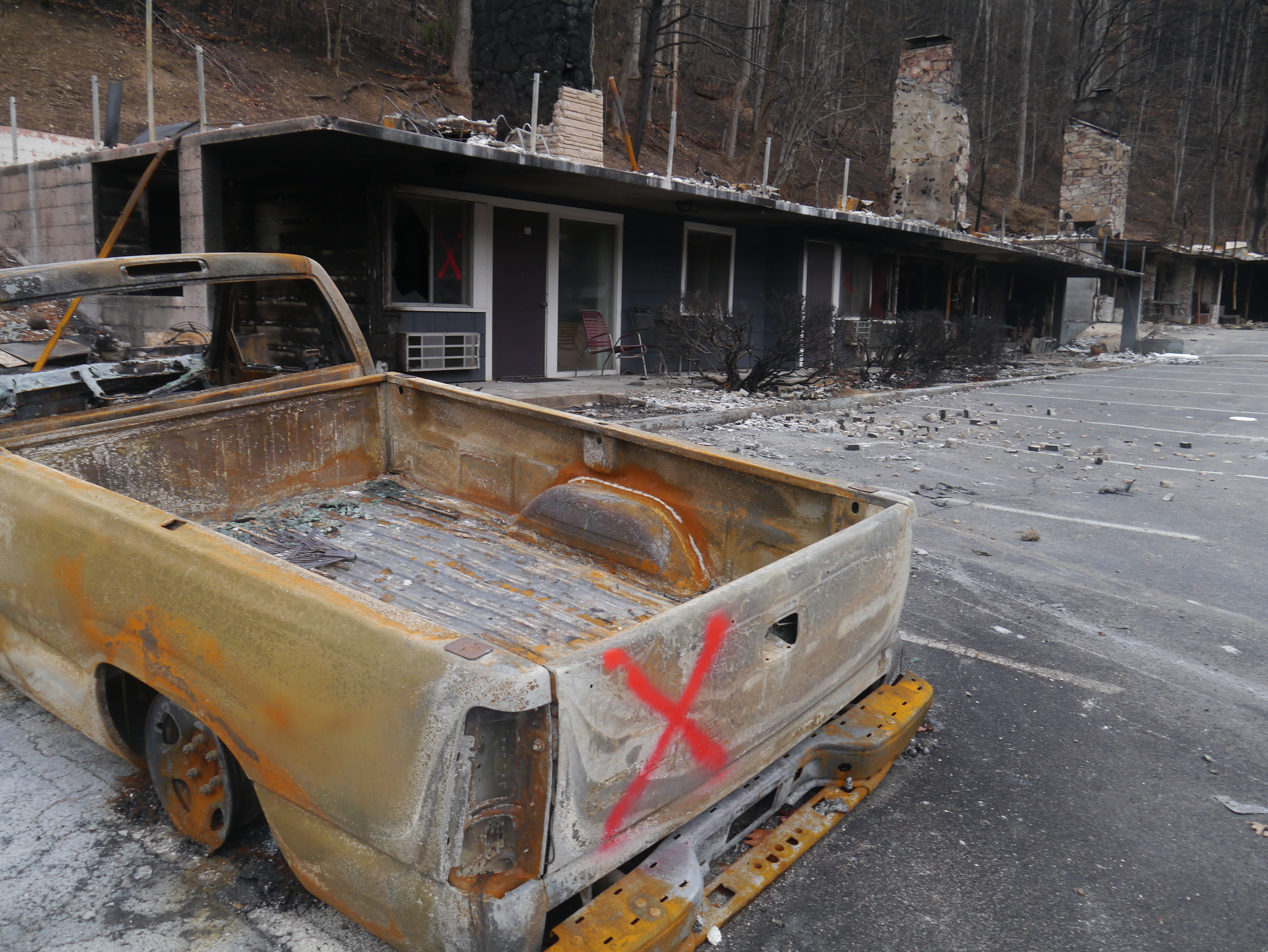
The Smokies fires of 2016, which came to a horrible head over that Thanksgiving weekend, killed at least 14 people and countless domestic pets and wild animals. Gale-driven flames burned through thousands of acres in the national park before escaping the boundary and destroying thousands of homes and other structures in Pigeon Forge, Gatlinburg and smaller communities throughout Sevier County.
“The social, cultural, economic, political, and natural impacts of this event are still being calculated,” according to UT Libraries.
Rising from the Ashes: The Chimney Tops 2 Wildfires Oral History Project, organized with the city of Gatlinburg and the Anna Porter library, collected 140 video and audio interviews with those impacted by the fires, including survivors, government leaders, first responders, scientists, clergy, journalists and mental health experts.
“This project documents one of the most momentous events in modern Tennessee history — in the voices of those who lived it,” said Steve Smith, dean of the UT Libraries in a news release.
“The collected stories document more than tragedy, however; they testify to the resilience of the human spirit. Our team is honored to help preserve these stories for history, study, learning, and research.”
All interviews are preserved within the UT Libraries’ Betsey B. Creekmore Special Collections and University Archives.
The 2016 Thanksgiving wildfire, which began on the Chimneys deep within the national park, was the largest in the eastern U.S. since the 1940s. It burned 17,000 acres, injured at least 200 people and forced the evacuation of thousands, according to UT Libraries.
“Visitors to the Rising from the Ashes website can approach the topic through different lenses such as the evacuation efforts, the disaster response and recovery, or the ecological impact; hear from medical personnel, business owners, or individuals directly affected by the wildfires; or simply browse through the recorded interviews,” according to a release announcing the final posting of the project.
- 2016 smokies wildfire
- smokies forest fire
- ut libraries
- oral history tn wildfire
- information about smokies wildfire
- tennessee wildfire history project
- anna porter library gatlinburg
- gatlinburg, tn
- pigeon forge
- rising from the ashes oral history ut
- dean of ut libraries steve smith
- november 2016 wildfires gatlinburg
- chimney tops wildfire
- tennessee wildfire
- 2016 sevier county wildfire
More...
From fungi to trees, Smokies life gets back on track five years after conflagration
Written by Thomas FraserNews Sentinel: Forest life blossoms five years after devastating Smokies wildfires
Researchers are tallying recovering species and noting some surprises five years after deadly wildfires tore through Great Smoky Mountains National Park and adjacent communities, according to News Sentinel science writer Vincent Gabrielle.
Fire-dependent species such as the table mountain pine are seizing new land as a result of the wildfires, and some scientists have been surprised by the proliferation of chestnut saplings. Those saplings are the progeny of remaining chestnut root systems, though few if any survive to maturity. The chestnut was largely eliminated from the American landscape more than 100 years ago by a blight that eliminated one of the most productive mast species in the Southern Appalachians.
Scientists are also intrigued by the reappearance of certain fungi decimated by the 2016 fires, which originated near the Chimneys and ultimately spread up Bullhead and then down into Twin Creeks and the surrounding developed communities. Fifteen people were killed and thousands of structures destroyed.
A lot of Smokies habitat is fire dependent, but few wildfires have been allowed to burn in the backcountry over the history of the park. The fire and its aftermath provide researchers a unique opportunity to determine the effects the fire had on the natural landscape and accompanying plants, fungi, trees and animals.
The beauty of convenience and other observations
Written by Onate Cittlali, Keenan Thomas, Ashlyn Smith
UTK students wax eloquent on the environmental issues that confront us every day
University of Tennessee journalism professor Mark Littmann asks students in his environmental writing class every semester to write short sketches about environmental issues they may witness during any given day. Such an assignment requires an almost poetical approach.
We published one such UTK environmental writing sketch last spring, the infamous story of the orphaned mayonnaise jar of Fort Sanders, and Hellbender Press decided to go with three this fall, because they are that good.
The disposable containers
It is Friday afternoon and the mother of three is at the grocery self-checkout buying her family’s food for the week. Her squeaky, gray shopping cart is domed with 12-packs of Coke, single-serve yogurt, single-packaged snacks, and the typical food staples that her children beg her for. She likes purchasing the individually packed snacks because they fit perfectly in the paper bag school lunches that she gives to her kids every day. That is the beauty of convenience.
Double bag the milk. The eggs and sliced bread get their own bag. Frozen foods are to be separated. She continues to place her cardboard-boxed foods in the plastic bags handily provided to her. The mother pays for her food and crumples her receipt.
When she gets home, she piles her grocery bags on her kitchen island. Carefully taking out each item she bought, she throws the plastic bags on the side counter out of her way. What is she supposed to do with these?
Her kids rush indoors as they get dropped off from school, ready for the weekend. They raid the fridge and each cracks open a chilled can of Coke. It is their favorite drink while they watch the afternoon cartoons. The half-empty cans sit on the coffee table for days before they are emptied.
The mother wonders why her trash bins fill up before the garbage men come each week. She thinks maybe she should start looking into buying Tupperware that will help with that, but washing dishes seems like such a hassle for a mother of three.
That is the beauty of convenience.
-Onate Cittlali
Semi-conscious environmental awareness
The student jumps into the shower while brushing his teeth to conserve water. After completing his morning routine, the student drives 15 minutes downtown with a full tank of gas.
He parks his car in a designated spot. Before class, he makes a stop at a vending machine, grabbing his third soda for the week and swearing it’s his last one. He places the empty bottle into the recycling bin because that’s the right thing to do.
Upon completing his classes, the student rushes to his car. He drives a few minutes to the immediate city outskirts. He parks and enters a pizza kitchen to start his shift.
He dons his apron and sweats next to the constantly operating oven, which only turns off between the kitchen’s closing and opening. The student grabs one of the “92-percent biodegradable” Styrofoam cups to get more soda.
He goes through three cups, along with three pairs of latex-free gloves, during his shift.
As the pizza boxes pile up next to the dumpster, the student heads to his car after work. He drives 20 minutes back to his house, passing a stream of litter on the highway. “At least I don’t do that,” the student thinks. The needle on the gas gauge begins to sway toward empty.
He gets home and jumps into the shower, brushing his teeth to conserve water.
-Keenan Thomas
An urban habitat
The long yellow school bus screeches to a halt at the top of the little neighborhood street at exactly 6:40 a.m.; the brakes are sensitive to the nippy October morning air.
Parents hug their little ones goodbye, wishing them a good day at school – and imploring them to eat the apple in their lunchboxes. The smiling driver closes the doors after the last anxious third-grader climbs the steep bus steps.
It’s a bumpy ride, but the warmth of the bus heaters is putting the boy in the seventh row back to sleep. The girl behind him though likes to paint pictures on the fogged window, with giggles spilling from her and her friend. Several older kids are finishing homework from the night before. The bus is filled with a chorus of whispers and snores, harmonizing with the whirring of the bus engine as it bounces down the road.
There is only one little girl, at the very front of the bus, who does not join in on the muted chaos of the morning. Head propped up against the buzzing window, she stares absently out of it.
Outside is a forest of fluorescent lamp posts under which a small herd of nursing home residents take shelter to smoke. Little sedans sleep in the dewy grass. An early morning runner bounds out from behind a bush.
It seems the tallest trees are chimneys producing fluffy clouds in the cold. She turns away from the window, for there is nothing to see. No one has their nose pressed tightly against the damp window, crowding to get a peek at what roams just outside.
They missed the deer by 10 years.
-Ashlyn Smith
Organized crime put a hit on global forests — along with beef, soy, palm oil and timber interests
Written by Jennifer Devine
We are cutting through forests we need more than ever
This article was originally published in The Conversation. Jennifer Devine is an associate professor of Geography and Environmental Studies at Texas State University.
Every year the world loses an estimated 25 million acres (10 million hectares) of forest, an area larger than the state of Indiana.
Nearly all of it is in the tropics
Tropical forests store enormous quantities of carbon and are home to at least two-thirds of the world’s living species, so deforestation has disastrous consequences for climate change and conservation. Trees absorb carbon dioxide as they grow, slowing its buildup in the atmosphere — but when they are burned or logged, they release their stored carbon, fueling further warming. Tropical forest loss generates nearly 50% more greenhouse gases than does the global transportation sector.
Knox County increases penalties for littering with fines going to illegal dump cleanup
Written by Thomas FraserThe Knox County Commission in November voted to approve an ordinance further criminalizing the act of littering in Knox County, according to Hard Knox Wire.
According to the new measure, anyone caught littering could be fined up to $500 for the offense, depending on the amount and type of trash involved. Convicted offenders may also be sentenced to up to 160 hours of trash-pickup duties.
The provision also gives Knox County citizens the right to remove trash from rights of way at their own discretion
Littering is already illegal under state law, but the new ordinance allows Knox County to levy its own punishments. For instance, all money collected in the enforcement of the new ordinance will be placed into an illegal-dump cleanup fund maintained by the county.