
News (865)
Children categories
ES! Initiatives (74)
EarthSolidarity!™ Initiatives are endeavors to which anyone can contribute in deed as well as in spirit, that
- minimize waste and environmental impacts
- increase community resilience
- respect and protect ecosystem processes and all forms of life
- contribute to good living conditions for everyone around the globe
- affirm and celebrate our interdependence and interrelatedness in the Web of Life!

Tennessee Valley Authority faces a push to get greener and more transparent
Written by Robert Zullo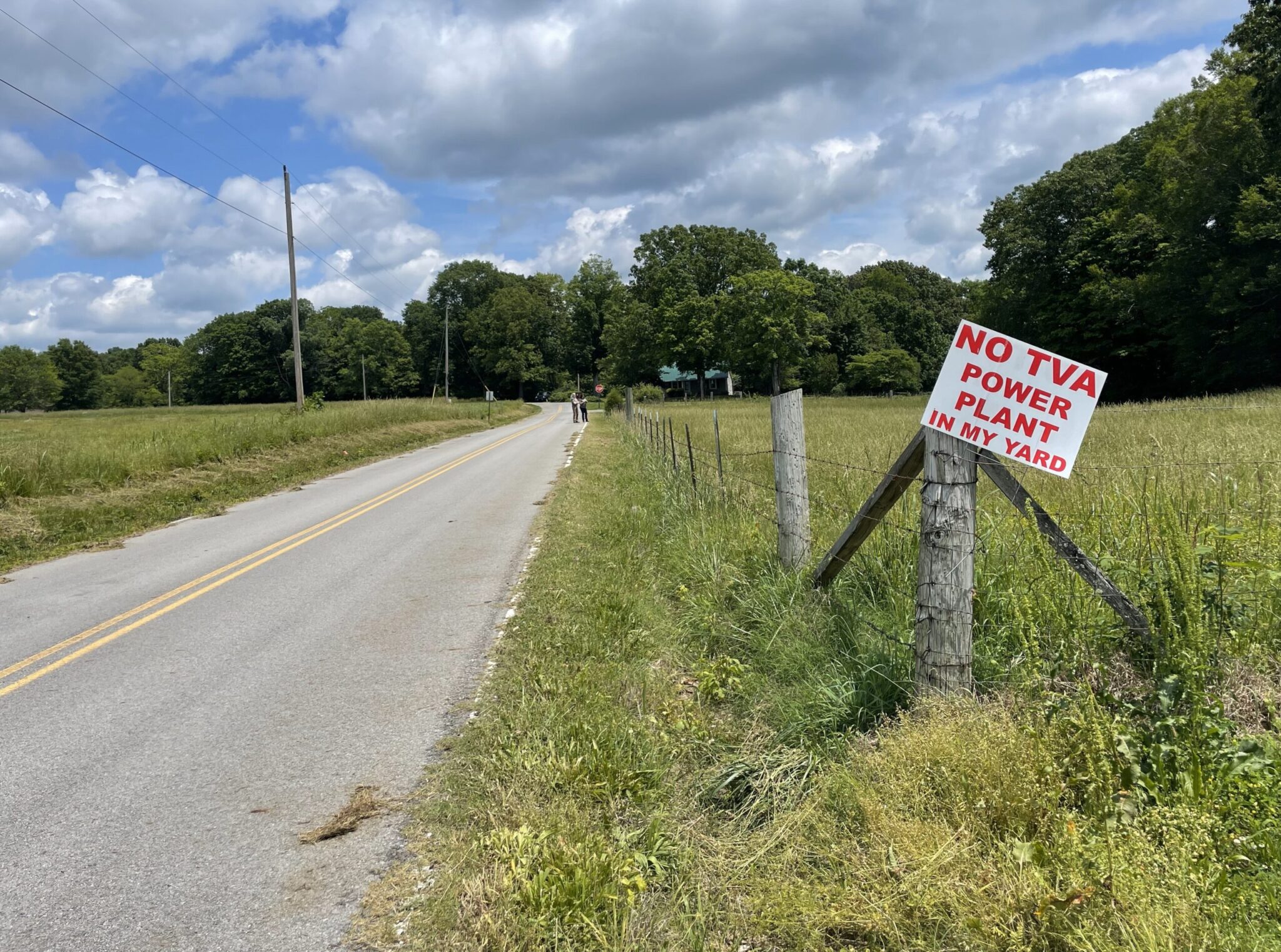 Nanette Mahler, left, and Tracy O’Neill walk along Macon Wall Road in Cheatham County, Tennessee, near the site of a proposed Tennessee Valley Authority gas power plant project. Local backlash against the proposal comes as the federal utility faces bipartisan legislation in Congress seeking to boost transparency in its planning process and scrutiny of TVA’s anemic renewable power growth compared to other utilities. Robert Zullo/States Newsroom
TVA ‘clearly a laggard’ in renewable energy
This article was originally published by Tennessee Lookout.
ASHLAND CITY — When he heard about the sale, Kerry McCarver was perplexed.
In 2020, the mayor of rural Cheatham County discovered that the Tennessee Valley Authority bought about 280 acres of rolling farmland “in the middle of nowhere” in his county, which lies just west of Nashville and is home to about 42,000 people.
He asked another county official who formerly worked for the TVA, the nation’s largest public power company, to find out what it planned to do with the land.
The answer they got was “future use,” and they speculated a solar farm might be in the works.
“It’s kind of the last we thought about it,” McCarver said during an interview in his office in May. “Then a year ago last summer, TVA called here needing a place to have a public meeting.”
The authority was now proposing a 900-megawatt natural gas-fired power plant, battery storage, pipelines and other associated infrastructure for the site, which came as a shock to McCarver and many other locals who felt it was wholly inappropriate for the area.
- tva
- tva clean energy
- tva board
- tva board meeting
- tva bull run
- tva coal fossil plant
- tva kingston
- kerry mccarver
- tva fossil plant
- tva gas plants
- cheatham county
- jeff lyash
- duke energy
- sierra club climate change
- southern alliance for clean energy
- stephen smith
- tennessee lookout
- tva governance transparency
- southern environmental law center
- energy alabama
Science takes wing at 2024 Ijams Hummingbird Festival
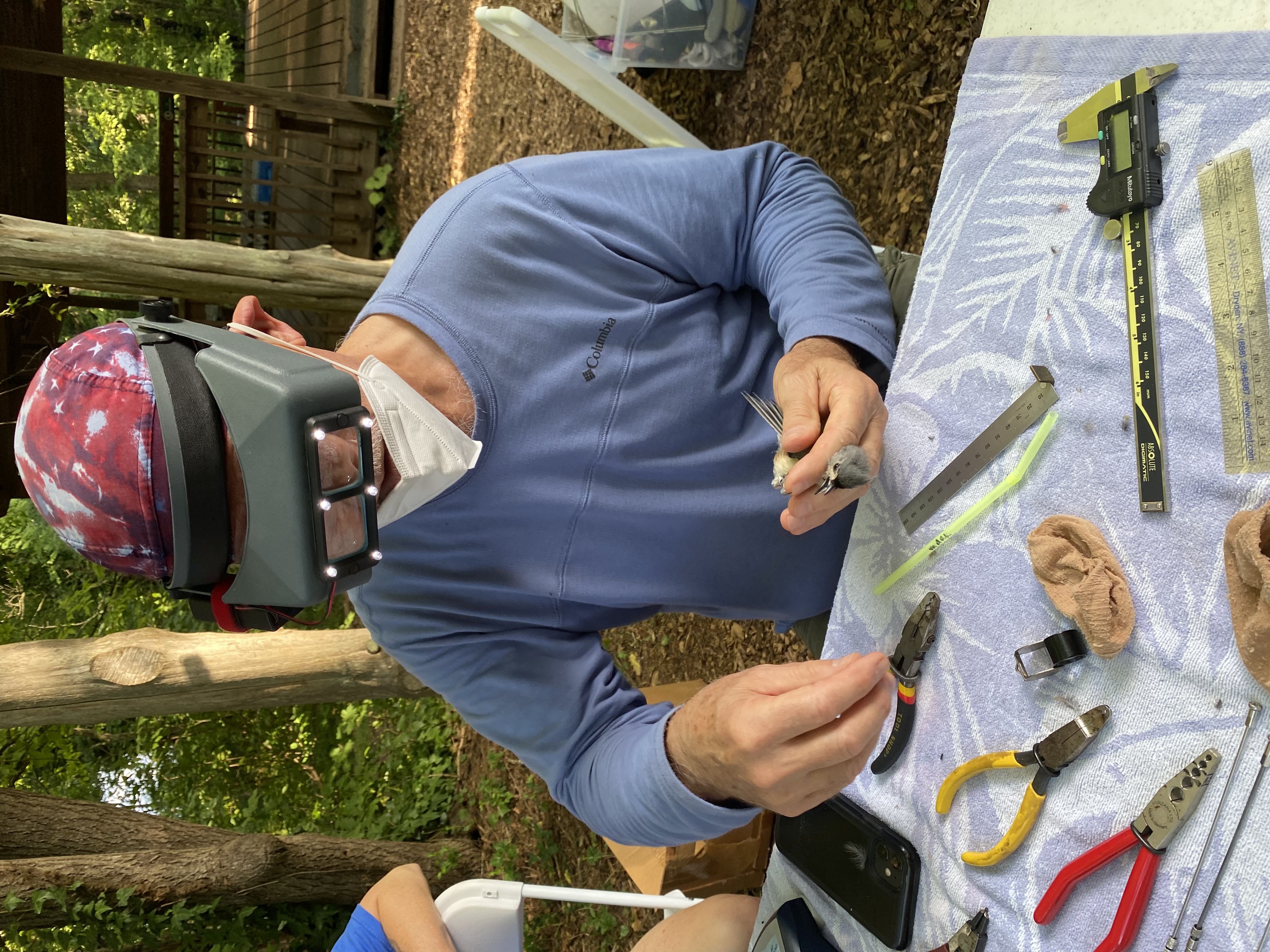 Certified master bander Mark Armstrong tends gently to a tufted titmouse shortly before turning his attention to a hummingbird at the 2021 Ijams Hummingbird Festival, set this year for Aug. 17. Thomas Fraser/Hellbender Press
KNOXVILLE — Ijams Nature Center’s 14th annual Ijams Hummingbird Festival: A Celebration of Wings will bring back its popular marketplace and add new activities to its offerings from 7 a.m. to 1 p.m. Aug. 17.
A general admission ticket provides access to educational booths and activities, dip netting, live animal encounters, and a kids’ nature zone where children and families can create arts projects and crafts, conduct experiments, and more. Community science opportunities, guided nature walks, and new hands-on workshops also will be offered.
General admission tickets are $12 for adults (ages 13+) and $9 for children ages 3-12. Children under 3 are free. Ijams Nature Center members receive a 10 percent discount on the festival ticket price.
This year’s festival also brings back the marketplace, featuring handcrafted art, nature-themed items, local plants, and garden décor, as well as speaker sessions.
Attendees can choose to schedule a bird-banding demonstration for an additional charge. Each small group will get the opportunity for an up-close look at a hummingbird or another bird in a small-group setting with master bander Mark Armstrong. He will weigh, measure, band, and talk about the birds before allowing one person in each group to release the bird.
Bird banding demonstrations are offered in 30-minute sessions starting at 7 a.m.; the last appointment is 12 p.m. Your best chance to see a ruby-throated hummingbird being banded is during the earlier appointments.
The 14th annual Ijams Hummingbird Festival: A Celebration of Wings is sponsored by Accenture, HomeTrust Bank, Stanley’s Greenhouse, Tennessee Wildlife Federation, and Wild Birds Unlimited Maryville.
Youth Conservation Corps team tends to Obed trails
Written by National Park Service A Youth Conservation Corps team performs trail maintenance at Obed Wild and Scenic River during a summer YCC program at the park. National Park Service
WARTBURG — 2024’s Youth Conservation Corps (YCC) team at the Obed Wild and Scenic River spent their summer working to maintain and enhance hiking trails. The YCC is a paid summer work program for youth ages 15-18 on federally managed lands. Since its inception in 1970, the YCC has introduced young Americans to conservation opportunities on public lands.
This year’s YCC team members include Lydia Barnett from Gateway Christian School, Emma Foust from Anderson County High School and Jimmy Hall, Haylee Morgan and Joshua Stedman from Wartburg Central High School.
Youth Conservation Corps members engage in activities that restore, rehabilitate and repair the natural, cultural and historical resources within federally preserved areas. The crew is led by National Park Service staff, who provide transportation, supervision, training and education. Students acquire basic trade skills and learn about cultural and environmental topics, fostering a sense of stewardship toward park resources. The program also includes instructor-led recreational activities, educational field trips and classroom instruction.
The completion of this year’s YCC project will extend the lifespan of trail assets and components, enhancing visitor satisfaction and safety. Participating youth will gain new skills, improve teamwork and develop a deeper understanding of environmental impact, contributing to the National Park Service’s mission.
Get on Little River for a day of summer fun, science and community
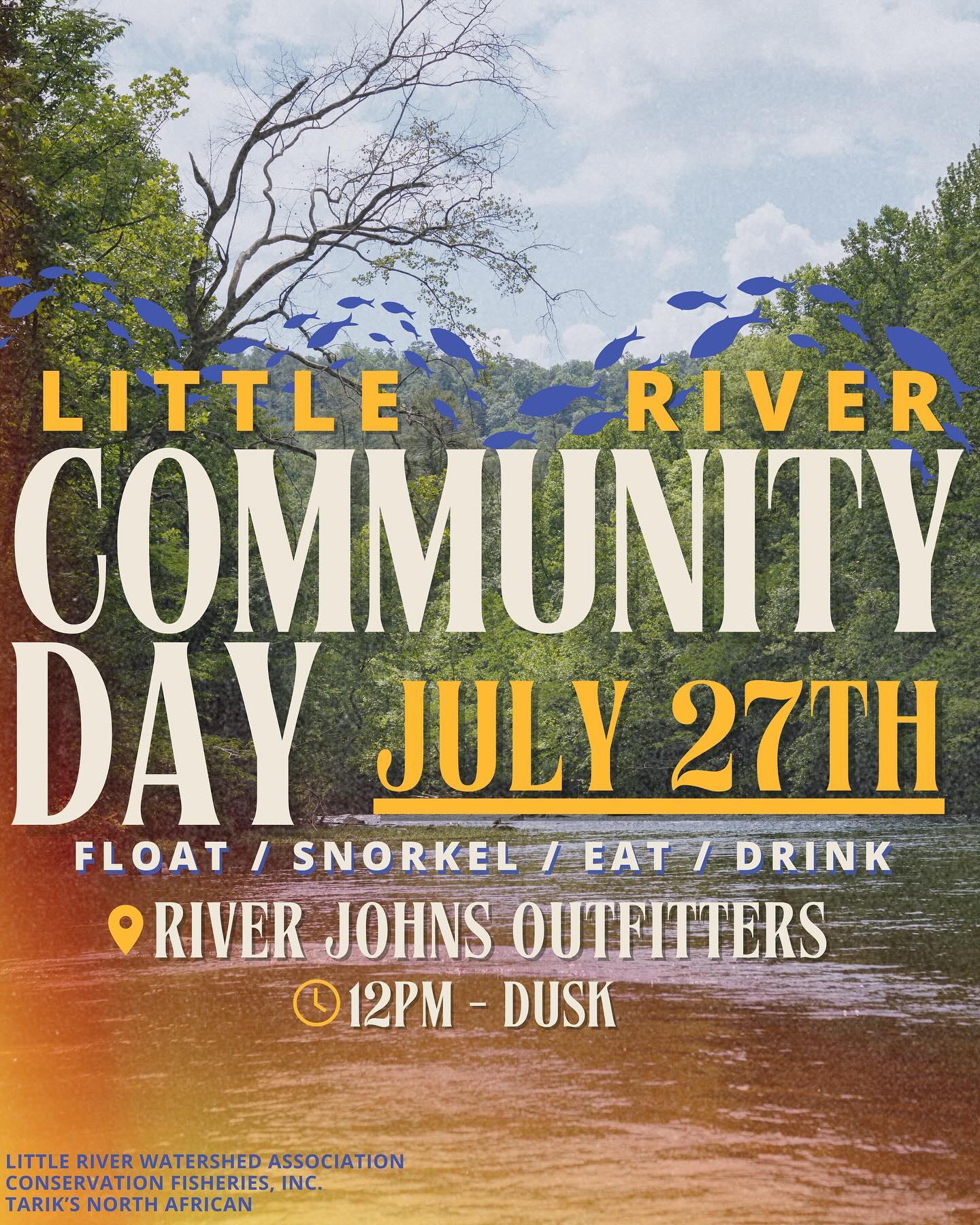
MARYVILLE — Come hang out on Little River with friends and family and learn about river life with the scientists and staff of Conservation Fisheries Inc. and Little River Watershed Association.
The educational fun kicks off at noon July 27 with the start of shuttled floats down Little River ending back at River Johns, 4134 Cave Mill Road. (Bring your own personal flotation device).
Guided snorkeling (masks and snorkels provided) in the river at River Johns begins at 3 p.m. The day wraps up with food from Tarik’s North African, or you can bring your own picnic.
Park service opens comment period for Foothills Parkway extension from Wears Cove to Gatlinburg
Written by National Park Service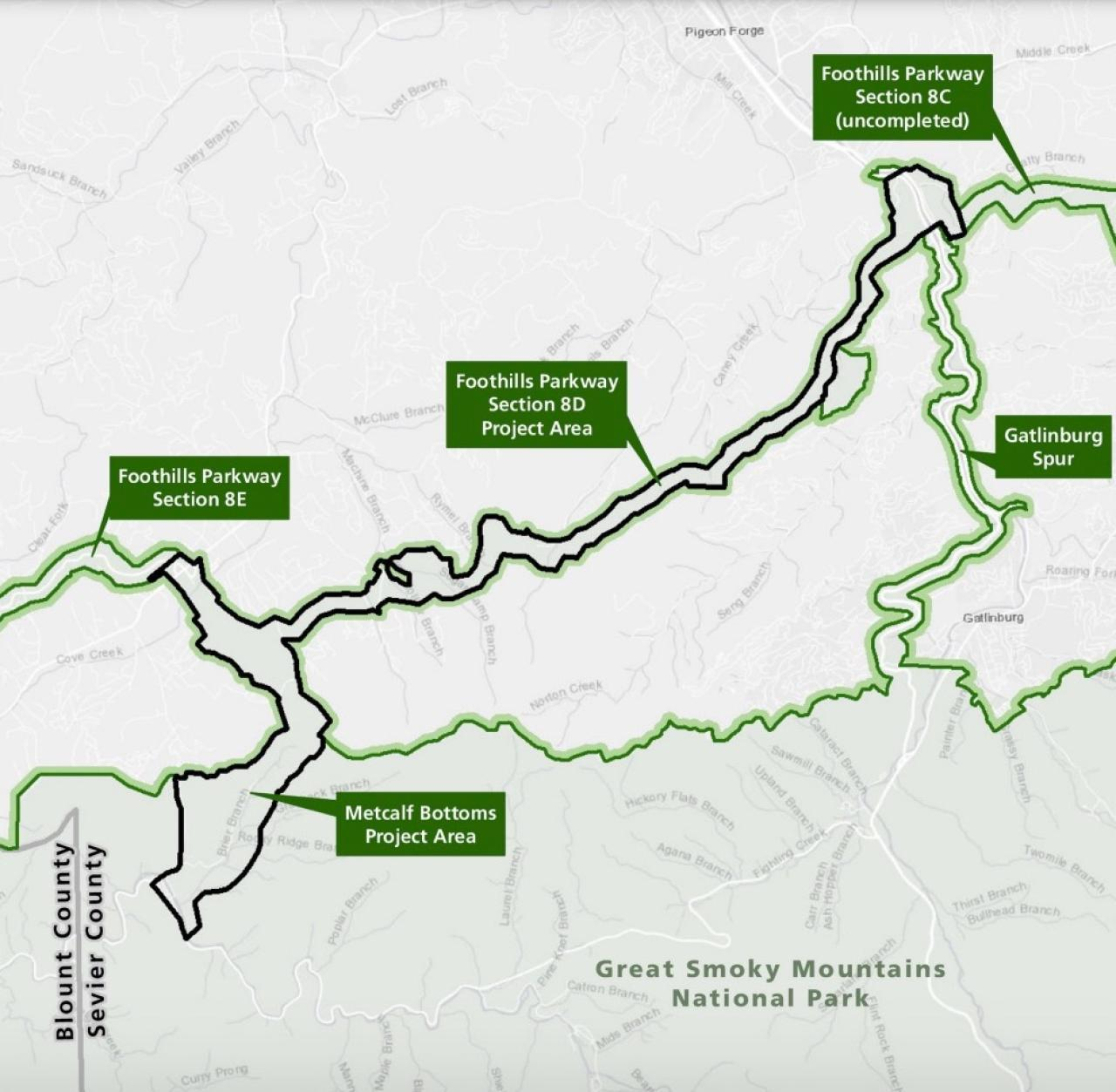
GATLINBURG — The National Park Service has posted the Foothills Parkway Section 8D Environmental Assessment (EA) for a 30-day public comment period ending Aug. 21. The EA evaluates the construction of nine miles of new parkway from Wears Valley to the Gatlinburg Spur near Pigeon Forge and Gatlinburg.
(Hellbender Press first reported on this proposal in 2021.)
A virtual public meeting about the EA and the proposed action will be held at 5 p.m. July 30. The meeting will include a presentation about the overview of the project and give time for the public to ask questions.
Read the EA, learn more about the proposed Foothills Parkway Section 8D project, and provide comments.
Before FDR, the artists and the auto dealers: How Knoxville influenced early days of Great Smokies park campaign
Written by Thomas Fraser The photos of the Thompson Brothers, namely Jim Thompson, helped galvanize support for the establishment of Great Smoky Mountains National Park along the Tennessee-North Carolina border. The photo is undated, but was likely taken in the 1930s. The original caption note from the photographer reads: “Most of the streams in the Great Smokies are entirely safe for drinking purposes. The water flows from deep-shaded mountain sides, free from human contamination, and it is well aerated as it dashes wildly down the steep mountain sides. Even during the hottest days of summer, the water is so cold that it will cause one’s hands to ache if held in the water for a few minutes.” University of Tennessee Libraries/Thompson Brothers Collection
Knoxville History Project observes 100th anniversary of a key meeting and month in Great Smoky Mountains history
KNOXVILLE — Parts of the mountains were broken, but it was all beautiful, and many artists and writers long took careful note of the rugged, remote rainforest to the southeast of the city.
Decades before modern scientific endeavors like the All Taxa Biodiversity Inventory began documenting the wondrous, mountainous biodiversity of what was to become Great Smoky Mountains National Park, photographers, writers, journalists, naturalists and artists, including many from Knoxville, extolled the virtues of the relatively lofty blue-green mountains seen in silhouette from the city.
Much of the land was scarred by logging and erosion; much was not, and its beauty, frozen in a frame or penned to a page, spoke for itself through countless artists.
Their early 20th-century renderings of the Smokies, from prose to photographs, amazed critical federal officials and the public and helped close the complex deal on what is now the most visited national park in the United States.
The Knoxville History Project is offering a series of events and symposium set for July 25-27, centered around the East Tennessee History Center on Gay Street, that will recognize the varied efforts of historical Knoxvillians to boost the concept of the national park through multimedia arts, science and journalism.
- tennessee archive of moving image & sound
- great smoky mountains conservation association
- great smoky mountains national park
- jim thompson
- sept 2, 1940
- all taxa biodiversity inventory
- knoxville history project
- east tennessee history center
- smokies national park campaign
- smokies history
- birth of a national park in the smokies
- eric dawson
- stark love
- central cinema
- bijou theater
- mcclung historical collection
- jack neely
- dedication of great smoky mountains national park
- when did smokies open?
- wbir
- carlos campbell
- ijams nature center
- franklin d roosevelt
- alum cave
- mt leconte
- mountain view hotel
Not just a bougie supper club: Slow Food returns, patiently, to mountains
Written by Élan Young Slow Food Tennessee Valley co-founder Sarah Bush picks heirloom tomatoes at Vuck Farm in Riceville. Élan Young/Hellbender Press
Slow Food ramps up regional food resilience efforts
RICEVILLE — On a hot summer day in late June, Sarah Bush, co-founder of Slow Food Tennessee Valley, slices some varieties of tender heirloom tomatoes freshly picked from tall rows of plants strung up in a giant, covered hoop-style greenhouse before serving them on a cutting board with a bit of farm-fresh chevre and basil.
The tomatoes span hues of yellow, red, green and purple, some a solid color or slightly striped and bearing intriguing names not found in grocery stores: striped Heart, Cherokee evergreen, chocolate stripe and Valencia. The flavor combinations explode into farm-to-table bliss.
The tomatoes are especially terrific for a reason: Bush, 46, has practiced regenerative farming since she was 28.
Mentored by other small farmers around the country who taught her how to exist and thrive in an economy that favors Big Ag, she now splits her time between Vuck Farm, a biodynamic farm in Riceville owned by her partner TJ Teets, and managing the produce department at Three Rivers Market in Knoxville — Tennessee’s only cooperative grocery.
She also serves on the planning committee for CRAFT (Collaborative Regional Alliance for Farmer Training), which is run by the Southeastern Tennessee chapter of the National Young Farmers Coalition.
Not a bougie supper club
Founded in 2008, the Tennessee Valley chapter of Slow Food is the only chapter in the state that has remained active since its founding.
A little more than two decades earlier in 1986, thousands of Italians gathered at the base of the sprawling Piazza di Spagna in the center of Rome to protest the country’s first McDonald’s restaurant. Slow Food’s founder, Italian journalist Carlo Petrini, was among them. Instead of bringing a sign with a slogan, Petrini brought a big bowl of penne pasta to share with the crowd chanting We don’t want fast food. We want Slow Food! Three years later the movement became an official organization and today spans 160 countries.
- three rivers market
- collaborative regional alliance for farmer training
- vuck farm
- national young farmers coalition
- alice waters
- wendell berry
- slow food
- tennessee agriculture enhancement program
- terra madre
- slow food of tennessee valley
- sarah bush
- old city garden
- jim embry
- university of tennessee institute of agriculture
- pesto festo
- ark of taste
- tj teets
- riceville
- small farmer
- farmland loss
- young farmer
- regenerative farming
Fish on: First-time study links recreational fishing and nutrition
Written by David Fleming A new paper reveals the important role that inland fisheries play in providing affordable nutrition around the world. Illustration courtesy of Lakshita Dey via Virginia Tech
Under-reporting of economics of sustenance fishing is a social justice issue
David Fleming is a Virginia Tech writer and communications specialist.
BLACKSBURG — It is a sight of summer: Along the banks of rivers and streams throughout the Southeast, recreational fishers will cast lines into the water, hoping that a fish will take the bait. In urban towns and cities such as Roanoke or Charlottesville, the same lines dangle from bridges or freshwater wharfs.
All of these activities are currently catagorized as “recreational fishing,” but for many fishers in the U.S. and around the world, the act of fishing in freshwater is not a leisurely pursuit but a way to provide critical sustenance and nutrition for individuals, families and communities.
An expansive new paper, co-authored by Virginia Tech Assistant Professor Elizabeth Nyboer of the College of Natural Resources and Environment and published in the journal Nature Food, reveals the underrecognized extent that inland recreational fisheries provide food and nutrition to people as well as offers insight on their vulnerability to future climate challenges.
- national climate adaptation center
- freshwater fisheries
- value of recreational fishing
- nutrients from fish
- sustenance fishing
- provisioning fishing
- virginia tech
- virginia tech college of natural resources and environment
- elizabeth nyboer
- usgs
- nature food journal
- holly embke
- social justice
- social justice fishing
- recreational fishing
- zero hunger sustainable development goal
- economic importance of recreational fishing
- inland fisheries
DOE agrees to $42m in Oak Ridge environmental reparations
Written by Department of Energy Moviegoers are seen outside a postwar screening of a film at Grove Theater chronicling Oak Ridge’s role in the development of nuclear weapons and energy. Department of Energy Photograph Collection/Oak Ridge Public Library
Public/private grants will fund natural resource preservation and enhancement in East Tennessee
OAK RIDGE — The U.S. Department of Energy signed a $42 million agreement as part of the Natural Resources Damage Assessment and Restoration (NRDAR) process for impacts from its historic operations on the Oak Ridge Reservation.
Contamination released from the Oak Ridge Reservation negatively impacted natural resources and services depending on those resources in the region. The goal of the NRDAR process is to restore natural resources and replace natural resource services equivalent to what was lost.
A trustee council comprised of representatives from the state of Tennessee through the Tennessee Department of Environment and Conservation (TDEC) as the lead state agency, U.S. Fish and Wildlife Service, Tennessee Valley Authority and DOE evaluated how natural resources were injured and developed a Restoration and Compensation Determination Plan. That document was finalized in December 2022 after accepting public comments.
All funds from the $42 million agreement will be deposited into an account held by the state to fund grants to organizations and public entities for a wide range of local projects that either enhance the area’s natural resources or provide nature and recreational opportunities.
 Katheryn Albrecht holds a juvenile American kestrel just prior to releasing it into the Wildwood area of Blount County as part of the Farmland Raptor Project. Thomas Fraseer/Hellbender Press
Farmland Raptor Project takes wing to expand raptor populations on private properties
WILDWOOD — She felt the bird in her hand in her heart as the kestrel strained toward freedom.
Elise Eustace, communications director for Foothills Land Conservancy, blessed the bird and let it go, free to make a home somewhere on the 300-acre Andy Harris Farm or elsewhere in the Wildwood area of Blount County. “I’ve never gotten to do something like this,” she said. “So exciting.”
Two other juvenile kestrels joined their kin on the warm summer afternoon, lighting into nearby oaks and atop a telephone line above the red and yellow pollinator gardens and dry pasture and cornfield and copses that punctuate the property in the shadow of smoky knobs that rise gradually to the Smokies crest beyond the blue-green hollows of the Little River watershed. Resident sparrows, bluebirds and kingbirds voiced displeasure at the new arrivals.
ORNL engineering eco-friendly solvents
Written by Oak Ridge National Laboratory ORNL researchers are using artificial intelligence to speed the identification of environmentally friendly solvents for industrial applications. Andy Sproles/ORNL, U.S. Department of Energy
OAK RIDGE — Oak Ridge National Laboratory scientists developed a method leveraging artificial intelligence to accelerate the identification of environmentally friendly solvents for industrial carbon capture, biomass processing, rechargeable batteries and other applications.
The research targets a class of solvents known for being nontoxic, biodegradable, highly stable, cost-effective and reusable.
The scientists developed a method to predict solvent viscosity — a key property impacting performance for industrial applications. They compiled nearly 5,000 data points on 672 solvents, evaluated quantum chemical features that guide solvent molecular interactions, and deployed an algorithm called categorical boosting to quickly parse the data and determine the best candidates.
“We reduced computational time and complexity with our approach, while still incorporating all possible molecular interactions,” said ORNL’s Mohan Mood.
ORNL’s Michelle Kidder said, “Interpretable machine learning helps us to design solvents with desired properties for carbon capture by reducing experimental time and cost in the laboratory.”
Gather Under One Canopy at Tennessee Urban Forestry Council conference
Written by Thomas Fraser
NASHVILLE — The annual Tennessee Urban Forestry Council conference is set for Nov. 14-15 at the Scarritt Bennett Center.
This year’s theme is Under One Canopy, which will highlight how individuals, organizations and municipalities are engaging with diverse stakeholders and cross-sector partners to make an impact in Tennessee communities through urban forestry. Confrence attendees will celebrate achievements from across the state, exchange ideas and learn from the latest urban forestry studies and stories.
Full registration and lodging details will be announced soon.
Harpeth Conservancy fundraiser comes with dinner in a creek


KINGSTON SPRINGS — The 2024 Dinner IN the Creek, a fundraiser for the Harpeth Conservancy, will be nestled in the serene beauty of Bell’s Reserve in Kingston Springs. This hidden oasis, with over a mile of Harpeth River waterfront, offers a unique setting for the event in a charming spring-fed creek at the heart of the 600-acre property.
This year’s Dinner IN the Creek, sponsored by Amazon, is set for 6-9 p.m. July 23. Tickets are $500 and include a Hispanic-roots dinner from renowned chefs and live entertainment from Brother and the Hayes.
Harpeth Conservancy’s vision is clean water and healthy ecosystems for rivers in Tennessee championed by the people who live here.
 An area of high pressure lingered in the upper atmosphere over the U.S. Midwest and Northeast in June 2024. This pushed warm air toward the surface and trapped it there—a weather phenomenon meteorologists call a heat dome. The heat wave reached the Southern Appalachians, as seen in this model generated from NASA Earth Observatory data. NASA
How climate change is heating up the weather, and what we can do about it
This article was originally published by The Conversation.
The heat wave that left more than 100 million people sweating across the eastern U.S. in June 2024 hit so fast and was so extreme that forecasters warned a flash drought could follow across wide parts of the region.
Prolonged high temperatures can quickly dry soils, triggering a rapid onset drought that can affect agriculture, water resources and energy supplies. Many regions under the June heat dome quickly developed abnormally dry conditions.
(The average temperature of June was about 7 degrees above normal in Knoxville as reported by Weather Underground).
The human impacts of the heat wave have also been widespread. In Ohio and Pennsylvania, emergency room visits for heat-related illnesses surged. Several Massachusetts schools without air conditioning closed to protect kids and teachers. In New York and New Jersey, electric wires sagged in the heat, shutting down trains into and out of New York City and leaving commuters stranded.
- flash drought
- june heatwave
- heat and public health
- impacts of extreme heat
- solutions to extreme heat
- heat deaths
- drought
- climate connection to heat
- renewable energy
- air conditioning
- coping with extreme heat
- science of heat
- climate change heat
- climate change sociology
- home cooling
- jeffrey basara
- mathew barlow
- umass lowell climate science
Big South Fork volunteers honor natural heritage, national trails
Written by National Park Service Volunteers helped build this bridge on Sheltowee Trace in Big South Fork National River and Recreation Area. National Park Service
ONEIDA — Two popular trails were greatly improved with the help of volunteers during Big South Fork’s annual National Trails Day event, observed this year on June 22.
Volunteers helped build a 40-foot-long trail bridge between Yahoo Falls and Alum Ford on the Sheltowee Trace (a designated National Recreation Trail), by assisting park staff in transporting lumber and tools as well as the replacement of decking boards and handrails on the entire bridge. Volunteers also assisted trail crews with vegetation, drainage and tread improvements on the Proctor Ridge Horse Trail.
Volunteers are an important part of ensuring park trails are clear and well-maintained. If you are interested in learning more on how you can volunteer, contact the volunteer coordinator This email address is being protected from spambots. You need JavaScript enabled to view it., or call (423) 569-9778.
More...
Seeking the musical saw-whet, drawn to Smokies by space and time
Written by Rob Hunter Though seldom seen, the toot-toot tunes of the northern saw-whet owl are signs of late spring in the high peaks of Southern Appalachia. Rob Hunter/Hellbender Press
Though not on any formal breeding list, nocturnal nomads bring spring tunes to high Smokies
GATLINBURG — It’s a May evening and I’m standing at a pull-off on Clingmans Dome Road in Great Smoky Mountains National Park. My breathing is light as I close my eyes and listen intently for a singular sound on the crisp night air. I hold absolutely still to keep my heavy coat from rustling. The coat is necessary on nights at this elevation, even as Memorial Day approaches.
This is not my first stop along the road tonight and my patience is beginning to wane. Just as I decide to turn back toward the car, the sound I’m seeking reaches my ears.
Toot-toot-toot-toot-toot-toot-toot-…
 Saw-whet owls are not officially listed as Smokies breeders, but a wealth of anecdotal evidence suggests otherwise. Tennessee Wildlife Resources Agency
 A recent display of synchronous fireflies (Photinus carolinus) in the Smokies. Abbott Nature Photography
Thousands of visitors view annual firefly spectacles in Smokies area as natural light show dims elsewhere
ELKMONT — Anyone who has fallen in love knows reading a love poem is no substitute for direct experience. Similarly, no technology, no art form, nor any reportage can come close to the mesmerizing firsthand experience of witnessing hundreds of thousands of synchronous firefly beetles pulsing in the dark during the peak of their mating period in Great Smoky Mountains National Park.
Over the last 20 years, throngs of eager visitors have trekked by the thousands to catch this rare glimpse of collective insect behavior. The crowds posed problems: Since females and larvae of the species are on and under the ground, visitors can trample them if they stray off trail. Likewise, flashlights and other white lights, including from cell phone screens, can also disrupt courtship.
The firefly phenomenon caught fire in 1991, when Lynn Faust read an article suggesting that no synchronous fireflies lived in the western hemisphere, yet she knew that’s what she witnessed in the 1960s at the historic Elkmont community when she vacationed there with her in-laws. After she brought Photinus carolinus to the attention of scientists, word spread and new firefly pilgrimages to Elkmont were born.
- fireflies in smokies
- elkmont fireflies
- firefly tourism
- photinus carolinus
- elan young
- discover life in america
- becky nichols entomologist
- walk in the woods
- dancing bear townsend
- firefly hikes
- firefly camping
- grandfather mountain fireflies
- smoky mountain guides
- norton creek
- firefly habitat
- how can i attract fireflies
- all taxa biodiversity inventory
- bioluminescense
- synchronous fireflies
Nancy Manning is putting in the work for seven generations
Written by Ben Pounds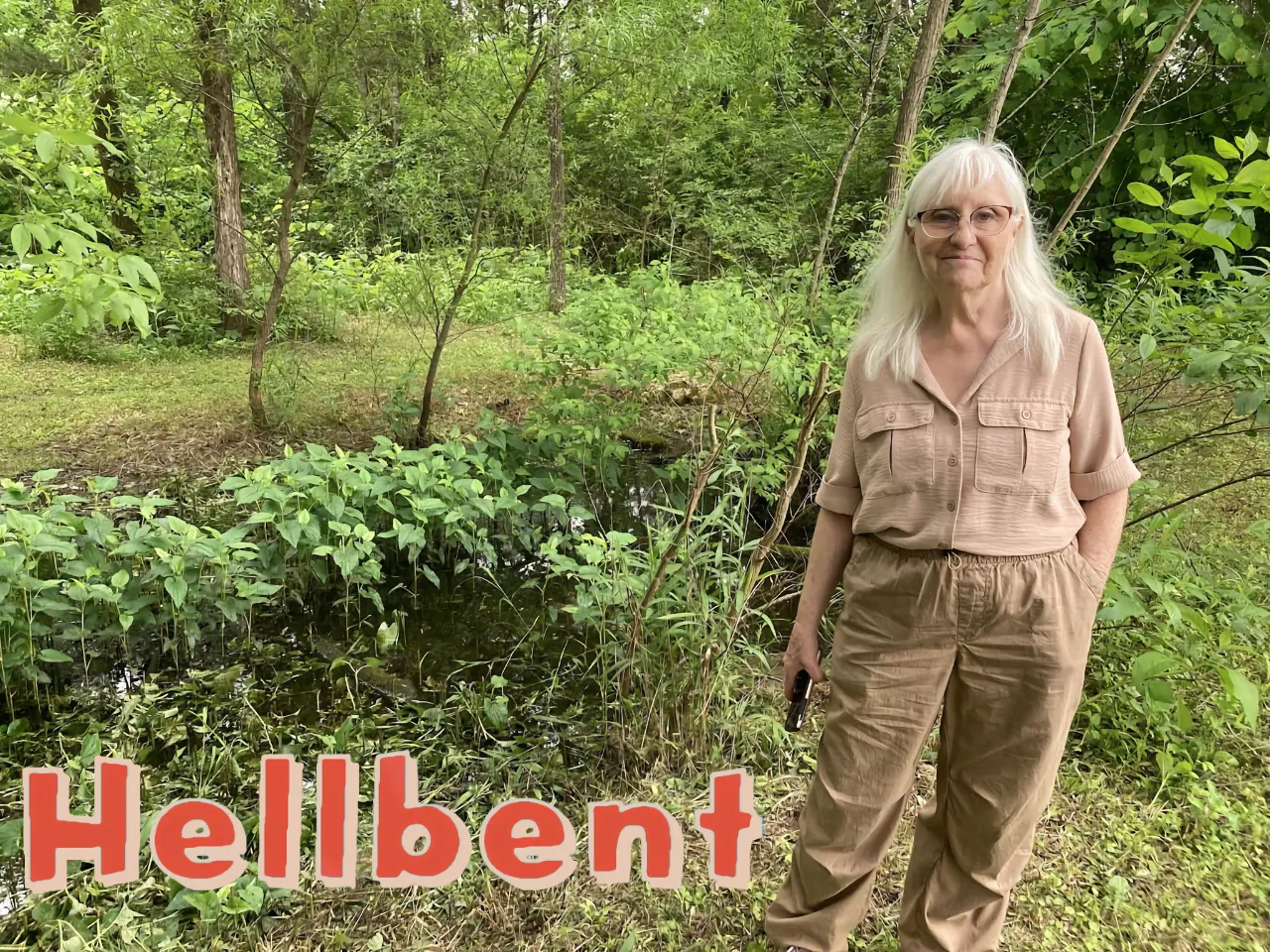 Tennessee Citizens for Wilderness Planning Executive Director Nancy Manning stands in a wetland in the Oak Ridge Cedar Barrens. She is cultivating a project that involves students from nearby Jefferson Middle School. Ben Pounds/Hellbender Press
New TCWP director already helping our kids ‘Explore and Restore’
OAK RIDGE — The students looked for tiny animals, tested water samples and took careful note of plants. Their recorded observations of Oak Ridge Cedar Barrens, a state natural area, were part of their class at the adjacent Jefferson Middle School (JMS), but volunteers from many outside organizations helped them with their scientific processes. They joined the students on the side of a wetland as they walked through the tall native grasses beneath the red cedars that give the small protected area its name.
Among these volunteers was new Tennessee Citizens for Wilderness Planning Executive Director Nancy Manning. Manning became TCWP’s chief operating agent Aug. 1 of last year, succeeding Sandra Goss after they worked together for a month. Centered in Oak Ridge, TCWP has a storied history preserving and maintaining not just the small Oak Ridge Cedar Barrens area but also Obed Wild and Scenic River and Big South Fork National River and Recreation Area. While Manning is continuing that work, she’s put a special focus on fighting “nature deficit disorder” a term credited to Richard Louv and his book Last Child in the Woods.
The phrase refers to a lack of direct experience with nature, and Louv tied such a deficit in his 2005 book to psychological disorders and obesity. So Manning conceived the “explore and restore” program, which gives students a chance to both study and maintain natural areas, and brought it with her from Texas to Tennessee.
- tcwp
- tennessee citizens for wilderness planning
- nancy manning
- travis audobon
- oak ridge environmental issues
- oak ridge airport
- oak ridge nuclear waste dump
- oak ridge cedar barrens
- obed
- big south fork
- nature deficit disorder
- last child in the woods
- jefferson middle school science
- red cedars east tennessee
- julie mccollough teacher oak ridge
- leonard peltier
- hellbent
Gatlinburg bear faces euthanization following viral social media moment
Written by Thomas Fraser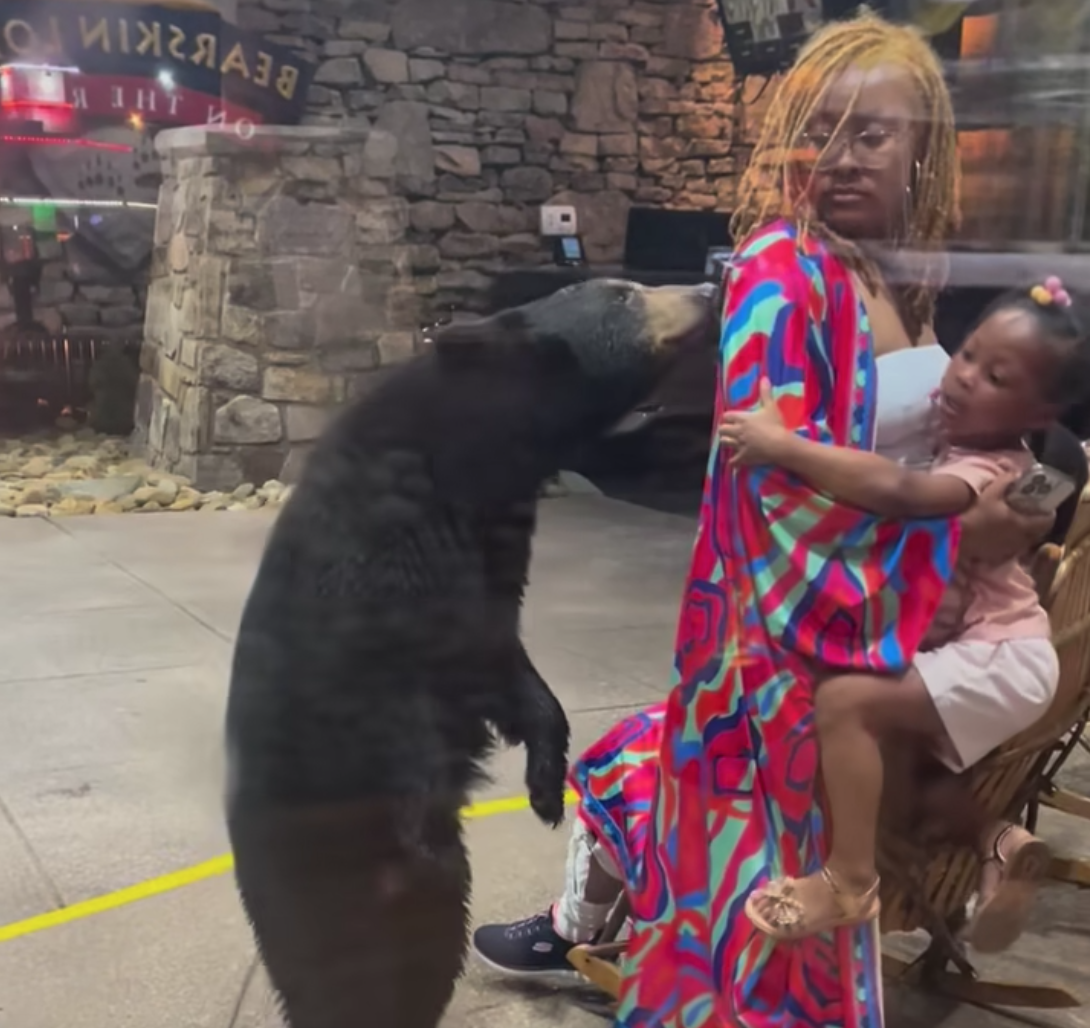 In this image from a social media video, a woman and child are seen outside the Bearskin Lodge in Gatlinburg. Biologists have concluded the bear is too habituated to humans and plans call for trapping and euthanizing the animal. Hellbender Press